
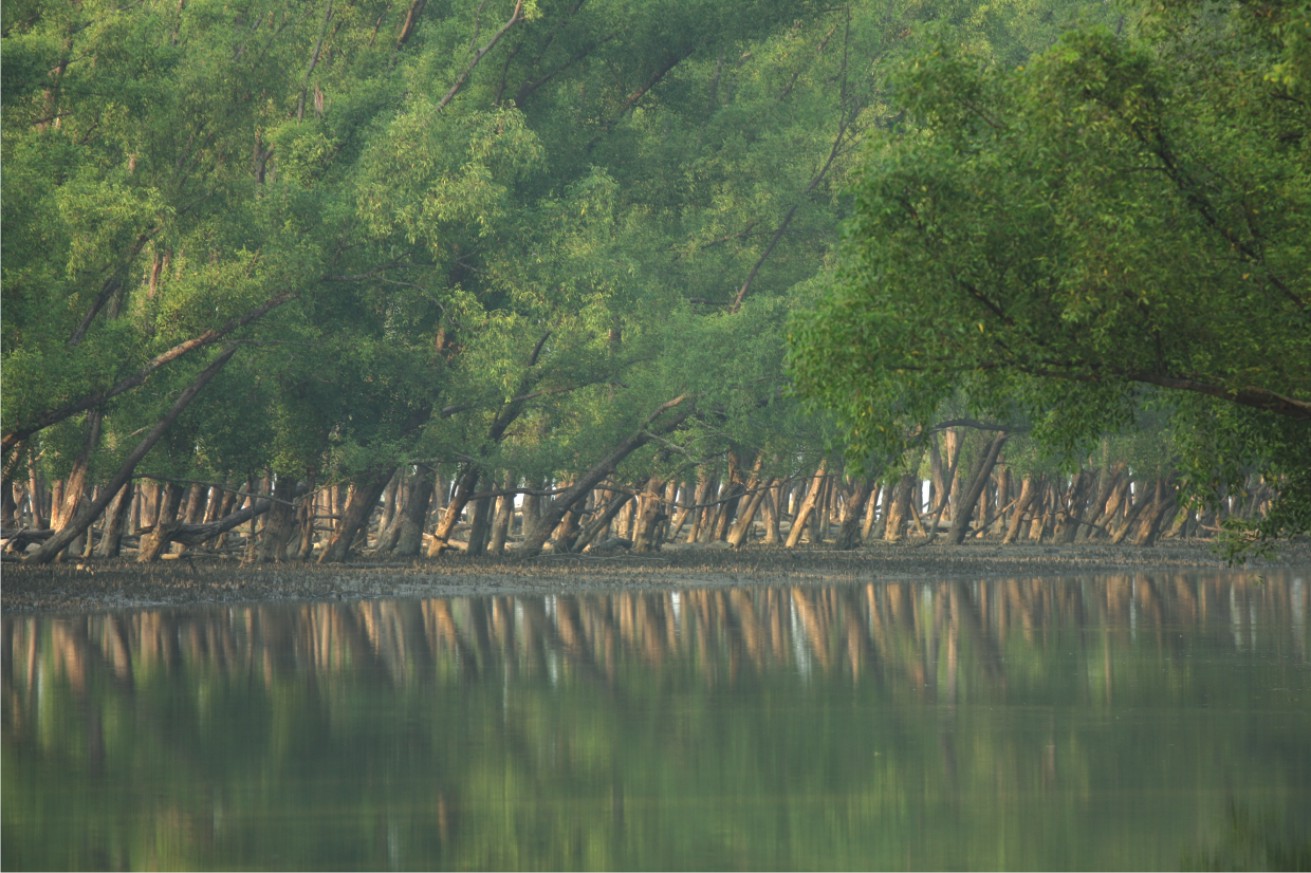
The Sundarbans is one of the most remarkable natural landscapes in the world. Known as the world’s largest mangrove forest, it is a place of mystery, biodiversity, wildlife, rivers, tidal creeks, forest islands, sandy beaches, traditional livelihoods, and deep cultural stories.
Located in the south-west of Bangladesh and extending into India, the Sundarbans covers around 10,000 square kilometres. The Bangladesh part covers approximately 5,800 square kilometres, while the Indian part covers around 4,200 square kilometres. Within the Bangladesh section, around 4,100 square kilometres are land area and about 1,700 square kilometres are water bodies.
The forest stretches along the shoreline of the Bay of Bengal from the Hooghly estuary to the Meghna estuary. The Bangladesh tract lies mainly across Khulna, Bagerhat, and Satkhira districts.
For travellers, researchers, conservationists, birdwatchers, photographers, and adventure lovers, the Sundarbans is not just a forest. It is a living delta, a wildlife sanctuary, a cultural landscape, and one of Bangladesh’s most important natural treasures.
Why the Sundarbans Is So Special
The name “Sundarbans” is believed to come from the Sundari tree, one of the most commercially and ecologically important trees in the forest. Sundarbans means the forest of Sundari trees. Locally, many people also call the forest “Bada,” meaning forest.
The Sundarbans is the single largest chunk of productive mangrove forest in the world. Its resources include forests, fisheries, wildlife, rivers, tidal waterways, creeks, beaches, and unique ecological systems.
UNESCO declared the Sundarbans a World Heritage Site in 1997. The forest has long been important for biodiversity protection, conservation education, tourism, biological research, and outdoor recreation.
Three important wildlife sanctuary areas in the Sundarbans are:
- Kotka-Kochikhali in the eastern section
- Hiron Point in the southern section
- Mandarbaria in the western section
These areas support rich concentrations of wildlife and vegetation, and many parts have remained undisturbed for decades.
Geography, Rivers, Creeks, and Beaches
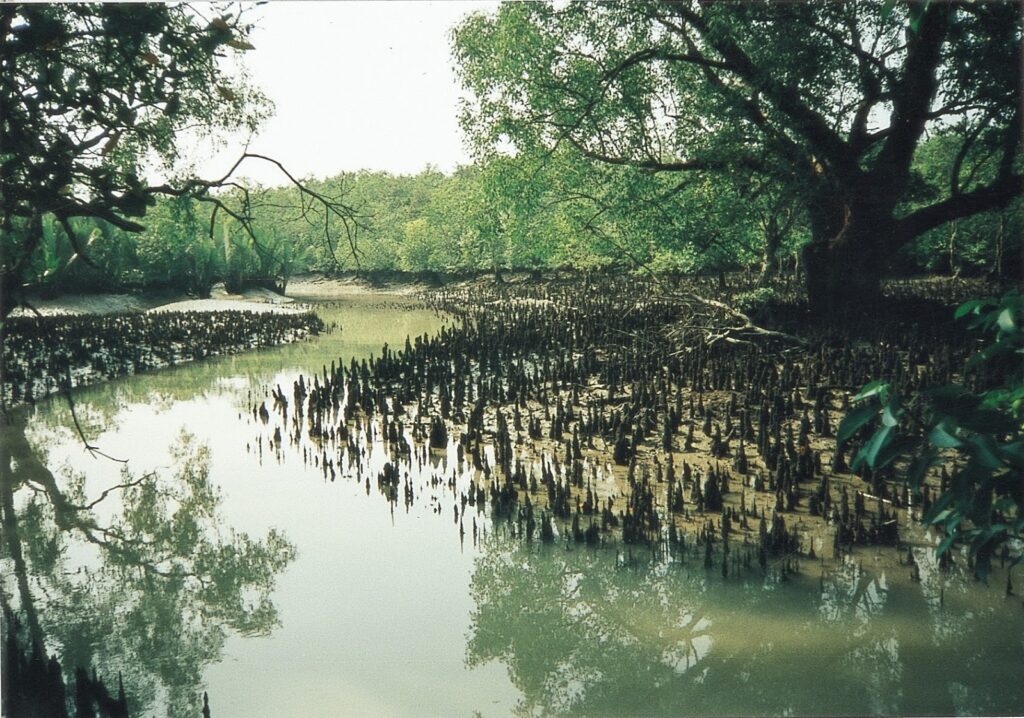
The Sundarbans is shaped by water. Large and small tidal waterways create opportunities for cruising, boating, forest observation, and ecological exploration.
Important rivers include:
- Baleswar
- Sela
- Passur
- Shibsha
- Malancha
- Raimongal
- Kobadak
The forest also contains a large number of tidal creeks. These creeks are essential for navigation through the mangroves and play an important role in drainage and forest ecology.
Along the Bay of Bengal and around some forest islands, the Sundarbans also has wild, undeveloped sandy beaches. These beaches are different from commercial tourist beaches. They are remote, natural, and connected with the forest’s ecological rhythm.
Biodiversity of the Sundarbans
The Sundarbans is a biodiversity-rich mangrove ecosystem. Its plants and animals are adapted to tidal inundation, strong wind flow, muddy terrain, salinity, and harsh environmental conditions.
The forest contains approximately:
- 330 plant species
- 35 species of reptiles
- 400 types of finfish
- 270 species of birds
- 42 species of mammals
Common vegetation includes Sundari, Kewra, Passur, Dhundul, Kakra, Gewa, Goran, Garjan, Kholshi, Bola, Hental, Nypa Palm, Tiger Fern, and Horgoza.
Common wildlife includes the Royal Bengal Tiger, spotted deer, wild boar, rhesus monkey, monitor lizard, otter, Gangetic dolphin, saltwater crocodile, king cobra, and Bengal cobra.
Common birds include great white egret, lesser adjutant stork, white-bellied sea eagle, kites, masked finfoot, kingfishers, drongos, bee-eaters, woodpeckers, paddyfield pipit, and red jungle fowl.
The Royal Bengal Tiger: The Supreme Predator
The Sundarbans is world-famous as the habitat of the Royal Bengal Tiger. In a single tract, the forest sustains one of the most important tiger populations in the world.
The tiger plays a major role in the forest’s ecology, mythology, and local culture. For forest-dependent communities, the tiger is both feared and respected. Many people living around the forest attribute supernatural qualities to the tiger because of its power and aggressiveness.
Unlike many other tiger habitats, Sundarbans tigers are semi-aquatic and are adapted to the mangrove environment. They can swim across rivers and creeks and move through muddy terrain.
The forest is also home to spotted deer, wild boar, rhesus monkey, fishing cat, jungle cat, leopard cat, otters, crocodiles, snakes, and many other species.
Mammals, Dolphins, and Forest Life
The Sundarbans has many fascinating mammals. Tigers are usually shy and active mostly at night, but Sundarbans tigers may also be active during the day. Spotted deer are among the most common mammals and often gather in open forest areas and meadows.
Rhesus monkeys and spotted deer create one of the most interesting wildlife relationships in the forest. Monkeys often feed in trees, and deer may benefit from fruits or leaves dropped from above. Both species are commonly seen in suitable areas.
Aquatic mammals are also part of the Sundarbans ecosystem. The Gangetic dolphin is one of the notable species and can sometimes be seen in river confluences, with its dorsal fin briefly appearing above the water.
The Sundarbans as a Reptile Habitat
The Sundarbans is also a significant habitat for reptiles. Saltwater crocodiles were once more common in the river channels, though habitat pressure and hunting have affected their population. Some crocodiles may still be seen basking on riverbanks in winter during low tide.
Water monitors, king cobras, sea snakes, kraits, pythons, and other reptiles are part of the forest’s biodiversity. Many reptiles are more active in the wet season, while some bask in the sun during winter.
The forest and its islands are also important for turtles. Olive ridley and hawksbill turtles have been reported to nest along beaches in some areas, while other turtle species may occasionally appear.
Birdwatching in the Sundarbans
The Sundarbans is a rewarding destination for birdwatchers. About 300 bird species have been reported in the forest and its impact zone. A significant portion of these birds are migratory.
The mangrove swamp is especially famous for its kingfisher community. In a single tract, visitors may record several species of kingfishers, which makes the Sundarbans a special place for birding.
Birds of interest include:
- Masked finfoot
- Mangrove whistler
- Mangrove pitta
- Pallas’s fish eagle
- White-bellied sea eagle
- Lesser adjutant stork
- Spoonbill sandpiper
- Goliath heron
- Crested serpent eagle
- Common kingfisher
- Black-capped kingfisher
- Jungle fowl
The best birding times are usually early morning and late afternoon when the light is low and birds are more active.
Mangroves: The Nursery of Fish and Crustaceans
Mangroves are salt-tolerant forest ecosystems found in tropical and subtropical intertidal regions. The Sundarbans mangrove forest supports a large variety of finfish, crabs, prawns, mollusks, and other aquatic life.
The mangrove food chain supports both freshwater and marine species. Many fish and shell creatures spend part of their life cycle in mangrove waters. This makes the Sundarbans ecologically and economically important.
The forest is also known for edible fish, prawns, and crabs, which support local livelihoods and food culture.
People, Professions, and Local Livelihoods
Around 3.5 million people in the impact zone of the Sundarbans depend directly or indirectly on forest products. Traditional professions still survive, though many have changed over time.
Important forest-related professions include:
- Baolis: collectors of timber, fuelwood, and thatching materials
- Jalias: fishermen
- Moualis: honey collectors
- Mollusk shell collectors
- Otter fishermen in some areas
Commercial wood felling has been stopped since the beginning of the 1990s, but forest-based livelihoods such as fishing, honey collection, and shell collection still continue.
Honey Hunting in the Sundarbans
Honey hunting is a short seasonal activity, usually lasting around three months. The Forest Department issues permits at the start of the season, usually around early April.
The western part of the Sundarbans, located between the Shibsha and Raimongal rivers, is known for wild honey. Flowers from trees such as Kholshi, Goran, Kewra, Garjan, Hental, and Gewa provide nectar sources for bees.
Different types of honey are associated with different flowers. Kholshi flower honey is especially prized. Honey collection is more than an economic activity; it is also connected with local culture, rituals, and forest traditions.
Culture, Belief, and Banabibi
The forest-dependent communities of the Sundarbans have developed their own culture and belief systems. Many forest workers pay respect to protective deities before entering the forest.
Banabibi is widely worshipped as the protector of forest dwellers. Local people perform Banabibi Puja, especially around late December, though the ritual may be arranged at other times as well.
The forest culture reflects the deep relationship between humans, nature, fear, faith, survival, and livelihood.
Tourism in the Sundarbans
The Sundarbans offers excellent opportunities for tourism, outdoor recreation, biological research, wildlife observation, birdwatching, conservation education, river cruising, and cultural exploration.
Tourism in the Sundarbans is different from ordinary city or beach tourism. Visitors need boats, permits, local guides, forest department coordination, food supplies, drinking water, safety preparation, and proper logistics.
Because there is no permanent settlement inside the main forest areas, tourists must carry what they need. A well-planned tour is essential.
Important Tourist Places in the Sundarbans
Kochikhali-Katka
Kochikhali and Katka are among the most popular tourist spots in the Sundarbans. Located in the southeastern part of the forest, this area is declared as a wildlife sanctuary.
Visitors can enjoy open meadows, beaches, birdwatching, boat cruising through small canals, and walking routes. The area is known for wildlife such as deer, birds, reptiles, and sometimes signs of tigers.
Hiron Point
Hiron Point is located on the west bank of the Kunga River and is also a sanctuary area. It supports populations of tigers, deer, monkeys, pigs, birds, and reptiles.
Trekking is not always advisable, but boating through small creeks can be fascinating. Kewrasuti watchtower, located a few kilometres from Hiron Point, is an important observation point.
Mandarbaria
Mandarbaria is located on the western bank of the Malancha River. It is less visited by tourists but is known for wildlife and dense forest. With precautions, walking through the jungle and along the beach may be possible.
The area is good for wildlife and birdwatching, though dense undergrowth and tidal fluctuation can make movement challenging.
Karamjal
Karamjal is one of the most accessible tourist spots from Mongla. It is about a half-hour cruise from Mongla by the Passur River.
Karamjal Wildlife Breeding Centre is managed by the Forest Department. Visitors may see deer, monkeys, crocodiles, and other wildlife. It is a popular destination for day visitors and local tourists.
Harbaria
Harbaria Eco Tourism Centre is a little more than two hours from Mongla by the Passur River. The area has rich plant diversity and wildlife. Visitors may have a chance to see barking deer, which is becoming rare.
Dubla Island
Dubla Island is located on the Bay of Bengal and is part of the Sundarbans. It is famous for Dubla Rash Mela, one of the biggest traditional fairs connected with the forest and fishing communities.
Tinkona and Kokilmoni
Tinkona and Kokilmoni are known for Kewra groves and rich birdlife. The banks of the Tinkona Channel support birds and animals and are suitable for nature observation.
Laudop
Laudop is located near the Passur River and is known among birdwatchers. It also has cultural relevance because of Banabibi worship and forest-dweller traditions.
Dubla Rash Mela
Dubla Rash Mela is one of the most important cultural events connected with the Sundarbans. It takes place around the full moon in the Bangla month of Agrahayan.
The fair started in 1923 and is associated with Hari Bhajan. Thousands of temporary fishermen who are engaged in fishing and drying fish around Dubla and nearby islands take part in the event.
The fair may last for several days and attracts local devotees, fishermen, tourists, and visitors from different regions. Handicrafts and wooden items are also sold at the fair.
Travel and Safety Tips for Sundarbans Visitors
The Sundarbans is beautiful, but it is also wild, muddy, humid, remote, and tidal. Visitors should prepare carefully.
Recommended items include:
- Olive green or nature-coloured clothing
- Light-soled shoes
- Green cap
- Comfortable trousers or shorts depending on season
- Windbreaker for winter or monsoon
- Small backpack
- Drinking water
- Light food
- Torch
- Knife
- Compass or GPS
- Protective case for optical instruments
- Binoculars or camera
- Strong walking stick for muddy terrain
A four-foot Y-shaped strong stick can help maintain balance while walking through muddy terrain and may also help with snake safety.
Tourists should always follow forest department rules, travel with experienced guides, avoid unnecessary noise, and respect wildlife distance.
Best Time to Visit the Sundarbans
The Sundarbans has a tropical climate with four main seasons:
- Pre-monsoon: March to May
- Monsoon: June to September
- Post-monsoon: October to November
- Dry winter season: December to February
The coolest period is December to January. The warmest period is usually around May to June.
For most tourists, the dry winter season is the most comfortable time to visit. River cruising, birdwatching, wildlife observation, and walking are easier during this period.
Why the Sundarbans Matters
The Sundarbans is important for Bangladesh in many ways. It supports biodiversity, protects coastal areas, provides livelihoods, supports fisheries, attracts tourism, and holds cultural and ecological value.
It is also a natural shield against cyclones and tidal surges. However, environmental changes, salinity, human pressure, climate change, and natural disasters continue to affect the forest.
Responsible tourism, conservation awareness, sustainable livelihoods, and careful management are necessary to protect this unique mangrove ecosystem.
Plan Your Sundarbans Tour with Local Expertise
A Sundarbans trip requires proper planning, trusted logistics, experienced field support, vessel coordination, permits, safety awareness, food arrangement, and local knowledge.
The Bengal Logistics Ltd. supports business tourism, project support, field logistics, research coordination, documentary assistance, cruiser and transport rental, fixer support, location assistance, and official fieldwork logistics in Bangladesh.
Whether you are a nature lover, researcher, documentary team, conservation professional, academic group, or adventure traveller, the Sundarbans offers an unforgettable experience.
With the right preparation and professional support, your journey into the world’s largest mangrove forest can be safe, meaningful, educational, and deeply memorable.
Conclusion
The Sundarbans is more than a forest. It is a living world of rivers, mangroves, tigers, birds, reptiles, dolphins, honey collectors, fishermen, legends, festivals, and coastal resilience.
It is mysterious, powerful, beautiful, and fragile at the same time.
For Bangladesh, the Sundarbans is a natural treasure. For visitors, it is one of the most extraordinary wilderness experiences in South Asia. For the world, it is a globally important mangrove ecosystem that deserves protection, respect, and responsible exploration.

Plan your business visit, project operation or field assignment in Bangladesh.
The Bengal Logistics Ltd. supports foreign delegations, development organizations, media teams, research groups and corporate clients with reliable ground support.